
SSoMA · version 0.02
A visual language for accounting.
Make financial ideas easy to see, remember and share. The Semiotic Standard of Modern Accounting is a set of standard symbols, one for each idea the books are built on. Colour and form together say what a thing is before you read a word.





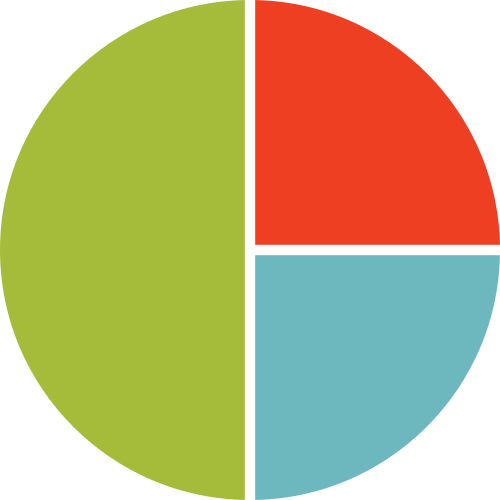








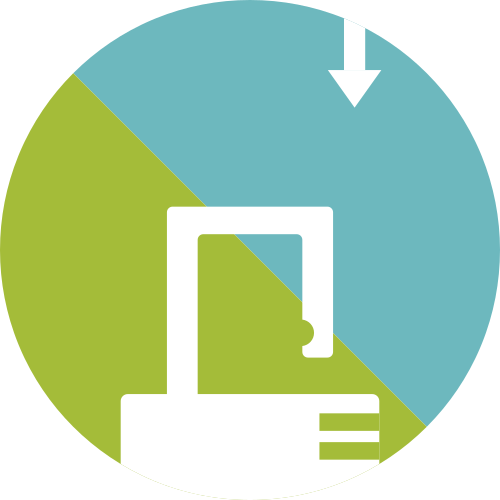



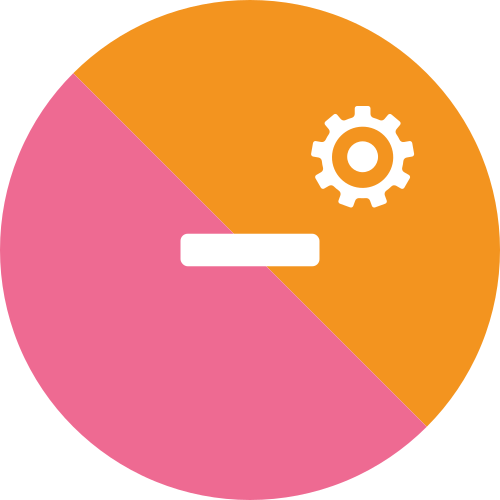









Numbers have charts. Ideas have nothing.
Graphs and charts help with numbers. They show trends and proportions at a glance. But the pictures used for the ideas behind the numbers, what an asset is, what is owed, what is left, are not consistent. Stock photos, clip art and decorative icons add interest. They rarely add meaning.
Without a standard, no picture builds on the last one. Nothing is recognised. Nothing is remembered.
SSoMA is a standard library of symbols that sits beside plain words and numbers. Learn it once and every report, every lesson and every budget reads faster.
Seven colours. Seven ideas.
Every symbol begins with colour. Each of the seven stands for one idea at the root of accounting. Like letters, they can be read on their own or combined. Once you know the colours, you know the general sense of a symbol before you see its form.
Assets
What the business owns.
Liabilities
What the business owes.
Equity
What is left for the owners.
Revenue
What comes in from customers.
Expenses
What it costs to run.
Cash flow
Money moving, in and out.
Structure
The books themselves: records, periods, the standard.
Meaning is built, not drawn.
Each symbol carries its meaning in its structure. The balance sheet shows how.
- Start with the principle. Assets equal liabilities plus equity. That equation is the balance sheet.
- Add the colours. Assets, liabilities and equity each have one of the seven.
- Combine them into a form. The three colours in one circle, split the way the equation splits. That shape means balance sheet, at a glance.
Principle, colour and form, all in one mark. Seen often enough, it stops being read and starts being recognised. That is the point.
The symbols.
Thirty-two, so far. The set grows through feedback and approved additions. The colour dots show which of the seven ideas each one is made of.

000
Semiotics
The standard itself. A sign that the symbols on a page follow SSoMA.
001
Assets
Everything the business owns or is owed: cash, inventory, equipment, invoices not yet paid.
002
Liabilities
Everything the business owes: bills, loans, taxes not yet paid.
003
Equity
What is left for the owners once what is owed comes out of what is owned.
004
Revenue
What the business earns from customers, before any costs come out.
005
Expenses
What it costs to run the business and deliver the work.
006
Balance sheet
A picture of the business on one day: assets on one side, liabilities and equity on the other, in balance.
007
Profit + loss
Revenue against expenses over a period. What came in, what went out, and what was left.
008
General ledger
The book that holds every account and every entry. Every report is built from it.
009
Cash
Money in the bank and on hand. The asset that pays the bills.
010
Inventory
Goods bought or made and not yet sold.
011
Accounts receivable
Money customers owe for work already done and invoiced.
012
Intangible assets
Things of value you cannot touch: a brand, a patent, software, goodwill.
013
Fixed assets
Things of value that last for years: vehicles, machines, buildings, computers.
014
Amortization
Spreading the cost of an intangible asset over the years it is useful.
015
Owner's equity
The owner's share of the business: what was put in, plus profits kept, less what was taken out.
016
Depreciation
Spreading the cost of a fixed asset over the years it is useful, as it wears.
017
Tax
What is owed to the government on income, sales or payroll.
018
Accounts payable
Bills received from vendors and not yet paid.
019
Deferred revenue
Money received before the work is done. It is owed back as work until it is earned.
020
Gross profit
Revenue minus the cost of what was sold. What is left to run the business.
021
Net income
What is left after every cost, including tax. The bottom line.
022
Cost of goods sold
What it cost to deliver what was sold: materials, subcontractors, direct labour.
023
Payroll
What the people are paid, and the taxes and benefits that go with it.
024
Interest
The cost of borrowed money.
025
Cash inflow
Money arriving in the bank.
026
Cash outflow
Money leaving the bank.
027
Net cash flow
Inflow minus outflow over a period. Whether the bank balance grew or shrank.
028
T account
The oldest picture of an account: debits on the left, credits on the right.
029
Chart of accounts
The list of every account the books use, and how they are grouped.
030
Period
The span of time a report covers: a month, a quarter, a year.
031
Sales
Revenue from selling goods or services. The part of revenue customers pay for directly.
An old idea.
Around 1400 BC, Mycenaean accountants kept their records in Linear B. The surviving tablets show small pictures, logograms, set beside the written words. The shorthand was shared, so it was fast and it was understood. SSoMA brings that clarity back to modern finance.
Built the way people learn.
- Chunking. A colour is a small unit of meaning. Combined into a form, it is a chunk the mind can hold.
- Dual coding. Each symbol pairs a picture with a word or a number. Both together are remembered longer than either alone.
- Transfer. Learn the colours and the forms once, and a symbol you have never seen still tells you what it is.
Where it belongs.
- Management reports and board decks
- Policy and control documents
- Close checklists and variance reviews
- Audit and compliance narratives
- Training and onboarding
- Financial education
- Personal finance tools and trackers
- Classrooms
Open, and meant to grow.
SSoMA is licensed under Creative Commons Attribution (CC BY) so that it can evolve. It is a living standard, shaped by the people who use it. Take it, adapt it, improve it, and say where it came from.
A First Edition eBook with the complete library and the design principles is in the works. Questions, ideas and new symbols go to logan@rectebooks.com.